Best Places to Live in Maine
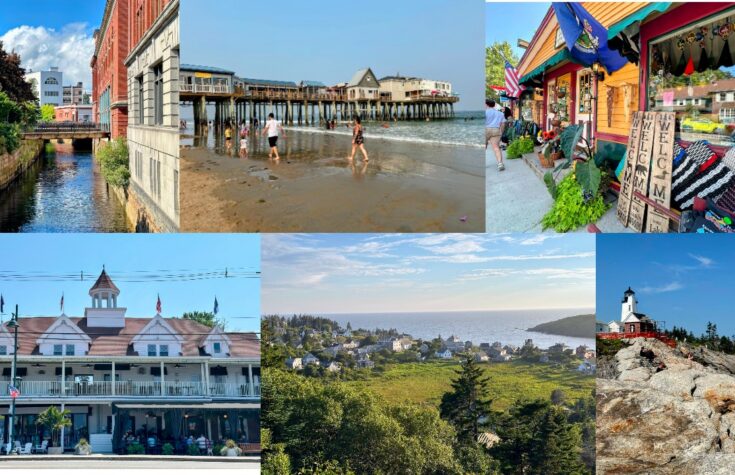
From the rugged coast and majestic mountains, to charming cities like Portland and ones straight out of a picture book like Bar Harbor; there’s a reason why so many people are clamoring to move to Maine.
Join us as we go over where you might want to live based upon employment, income, walkability, access to amenities and family status.
Transcription
Maine is a LARGE state. It’s almost the size of the rest of New England combined. There’s also only 1.4 million residents in the entire state. Half of that population is in Southern Maine with some population along the coast and in the interior along the i95 corridor. The rest of the state can be extremely sparsely populated including wide expanses of wilderness and lightly populated farmland.
Even the largest city , Portland, only has 66,000 residents in the city proper and just over half a million in the metropolitan area. That’s much much smaller than what most people might expect. However, that’s exactly what makes Maine so great. It’s the slower pace of life and access to stunning coastal regions and mountains. Not overcrowded city streets, large nightclubs or massive stadium events.
Where you’ll best fit in will be determined by your career and if you need access to jobs, your income level (Maine is pretty pricey overall), access to amenities such as nightlife and entertainment, if you want to live somewhere walkable and if you want access to Mountains, the Coast or Beaches.
I won’t be factoring in crime. Maine is literally the safest state in the country. There really are no “bad” neighborhoods or dangerous cities to avoid. In 2025 there were only 25 homicides in the entire state with only one occurring in an actual city. There are some areas with higher rates of homelessness, but that’s the worst of it.
Rural Living
Ok, so if you want to get away from it all and don’t care too much about pro sports or nightlife and you’re retired, you’ll want to avoid Southern Maine. If you have money to spend, the Mid Coast is perfect. Stick to the Coast near Boothbay, Darmiascotta, Wiscassett, Rockland, Camden or Belfast. These are all nice quintessential coastal Maine with small downtowns with local shops and restaurants. Rockland is by far the largest and will offer the most amenities. Note these towns can still get swamped with tourists and many businesses are seasonal. Demographics are definitely on the older side. For something quieter there’s all these rural fingers jutting from Route One. Pemaquid, St George, or even up in Blue Hills and Deere Isle.
If you’re on the wealthier side you could even live in or near Bar Harbor and Acadia National Park. If you prefer the beach and don’t mind the summer crowds, Southern Maine from Kittery to Wells is another option with York and Ogunquit in between. Just expect anything directly on the water to be over $1 million.
If you have less money to spend, you’ll want to be Downeast, North of Mt Desert Island. There’s Milbridge, Mechias, Lubec and Eastport, but these are much smaller than the population centers in Midcoast. Things can get extremely quiet and peaceful very fast.
If you prefer Mountains and Lakes to the coast, the Lakes Region offers a good combination of being close to the mountains and ski resorts, but still within an hour of Portland.
Or going even more rural, you can live near Rangely, a super nice mountain town close to Saddleback Ski Resort, the Carrabasett Valley near Sugarloaf and Flagstaff Lake, The Kennebec River Valley or closer to Greenville and Moosehead Lake.
Small Cities
If you want access to some amenities and some jobs but don’t want to live near Portland, your options are Augusta where there’s a lot of government jobs including really nice small towns like Hallowell and Gardener nearby. There’s also Bangor which is Maine’s 3rd Largest city with a small downtown and next to UMaine’s main campus in Orono. Both have some younger people and families. I can’t emphasize enough that these would be considered very small cities in other states. That being said, it’s impressive that Bangor does get some National Acts at Maine Savings Amphitheater and a handful of commercial flights at the airport.
Portland Maine & Suburbs
Ok, so that leaves Southern Maine, AKA the Greater Portland Metropolitan Area which consists of York and Cumberland County, but I’ll include parts of Sadagahoc and Androscoggin Counties too.
Portland is the economic and cultural capital of Maine. This is where most of the jobs are, particularly office work. This is where the minor league sport teams play. This is where 90% of musicians visit, if they visit Maine at all. This is where there’s the best nightlife, younger people, families, diversity, dining, museums and entertainment are.
If you have the money and want to live somewhere walkable, you want to be on the Peninsula. Pretty much everywhere on the peninsula will be expensive. At the core you have Old Port and the waterfront which has the lionshare of restaurants and bars and sees the heaviest amount of tourists. Congress Street acts as a spine, and there’s restaurants and other amenities all along its length.
The West End is even more upper class. East Bayside is where all the breweries are. Munjoy Hill used to be low income, but now it’s just as expensive as the rest of Portland.
If you can’t comfortably afford the Peninsula, but still want some walkability, Forest Ave in Deering has a good number of restaurants and shops including a lot of hidden gems tourists never see.
Otherwise, you’ll have to look outside of Portland proper. The rest of the city is actually pretty suburban.
Thankfully there’s several small cities nearby that offer good walkability at more affordable rates.
West Brook to the East has a small downtown with restaurants and shops and is a quick drive to Portland.
Similarly, you have Brunswick to the North, home to Bowduin College. There’s an extremely nice Main Street with restaurants, breweries and small shops plus in the mills, there’s a large flea market, antique market and an indoor farmers market in the winter. You’re also closer to the Midcoast for weekend escapes and you have Amtrak Access though at that point it’s a 3 hour ride to Boston. You can easily hop on 95 and be in Portland in 30 minutes.
To the South, there’s Biddeford and Saco. Home to the University of New England and you also have the benefit of being very close to beaches. Between the two, you have one of the highest concentrations of breweries, cocktail bars, bakeries and coffee shops per capita in all of Maine. The cities also do a great job at putting on events and festivals throughout the year including farmers markets, free summer concert series and festivals like RiverJam, La Kermesse and Harbor Fest. You’re just a 20 minute drive to Portland and you have easy Amtrak access and are significantly closer to Boston. This is the area you want to be in for beach access. Both Biddeford and Saco have their own municipal beaches.
Not going to lie, Biddeford, Brunswick and Westbrook aren’t as cheap as they used to be either. Southern Maine is expensive. You do, however, have some options if you don’t mind a longer commute. Sanford is a small city with some local shops and restaurants that’s a 50 minute drive from Portland and Lewiston between Portland and Augusta is the second largest city in Maine. Along with Auburn, there’s a good amount of downtown amenities. Lewiston is home to Bates College bringing in some youth culture and this is also one of the most diverse cities in the state if that’s important to you. However, Lewiston, while improving, still has many unsightly old mill buildings which might be unsettling to some people.
If you don’t care about walkability, well there’s plenty of suburbs to choose from surrounding Portland. On the wealthier side of the spectrum is Cape Elizabeth, famously home to the Portland Head Light, but also many stately homes.
You could also live in Falmouth or Yarmouth, Freeport home to LLB Bean or down in Kennebunkport.
For something more middle class, South Portland is right next door. Scarborough is another popular choice and has seen a lot of growth with subdivisions popping up everywhere.
To the East you have Gorham and Windham close to Lake Sebago which has its own boating and tourist culture. To the North is Cumberland and Grey. If you don’t mind a longer commute, you can live closer to Sebago, the Lakes Regions and everywhere in between.
Well that pretty much outlines most places you’d want to live in Maine. Let me know if I forgot any of your favorite towns or cities and comment below if you want to see a deeper dive into a city specifically in a future video.

Brad Brad